Capturing the Sundarbans: The Lens of Soumya Sankar Bose
By
theindianartcottage
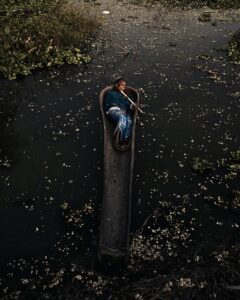
The Sundarbans, known for its mysterious mangrove forests and elusive tigers, holds stories that often go untold. Photographer Soumya Sankar Bose brings these hidden layers to light through his evocative, story-driven imagery. His work does more than document—it resurrects lost histories and forgotten people from Bengal’s margins.
Bose’s photographic journey into the Sundarbans captures not just the landscape, but the emotional texture of the region. His lens reveals quiet resilience in the faces of villagers, boatmen, and elderly survivors of past traumas. His art blurs the boundary between past and present, turning memory into a living, breathing element of the frame.
One of his most striking projects focuses on displaced communities who once sought refuge in the Sundarbans but were violently uprooted. These photographs, often staged with a haunting aesthetic, show people posed in their homes or in the jungle—neither entirely safe nor entirely free. Through them, Bose confronts viewers with uncomfortable questions about belonging, justice, and state power.
His photography is both poetic and political. The silence in his frames speaks louder than words. There’s a tension between beauty and pain, memory and myth. It’s in this duality that Bose finds his voice—and gives voice to others.
Through Soumya Sankar Bose’s lens, the Sundarbans is not just a landscape—it’s a layered narrative of survival, loss, and identity. His work ensures that the forgotten are not merely remembered but re-seen.