
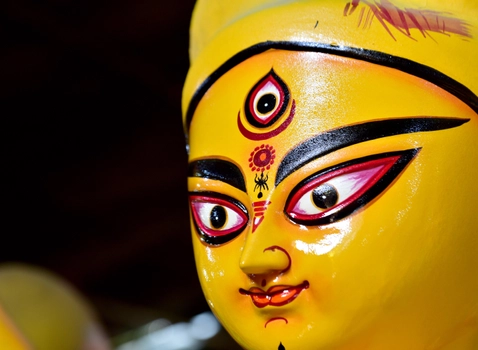

Durga idols in Kolkata have undergone a remarkable evolution over the years, reflecting the fusion of art and devotion. Traditionally, idols were modeled in Kumartuli, the historic potters’ quarter, with clay, straw, and natural colors. These idols followed classical iconography—Durga as Mahishasura Mardini, fierce yet divine.
However, with the rise of theme pujas, the idols too began transforming. Today, artisans and sculptors experiment with new materials and styles. From fiber glass to recycled metals, from minimalist depictions to hyperrealistic forms, Durga idols showcase the limitless possibilities of contemporary art. Some idols even carry strong messages—highlighting environmental issues, gender equality, or cultural diversity.
This shift has sparked debates. Purists argue that idols must remain close to tradition, while others embrace innovation as a way to keep the festival alive and relevant. Interestingly, many artists manage to strike a balance—retaining Durga’s essence while giving her a modern visual language.
What remains unchanged is the emotional bond. Whether traditional or experimental, the idol still commands devotion, awe, and reverence. Crowds flock to see the artistry, but they also bow their heads in prayer.
The changing face of Durga idols is proof of how art evolves with society. In Kolkata, idols are not just sacred objects; they are dynamic cultural symbols where faith meets creativity, and tradition embraces change.