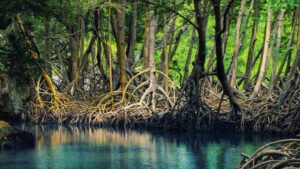
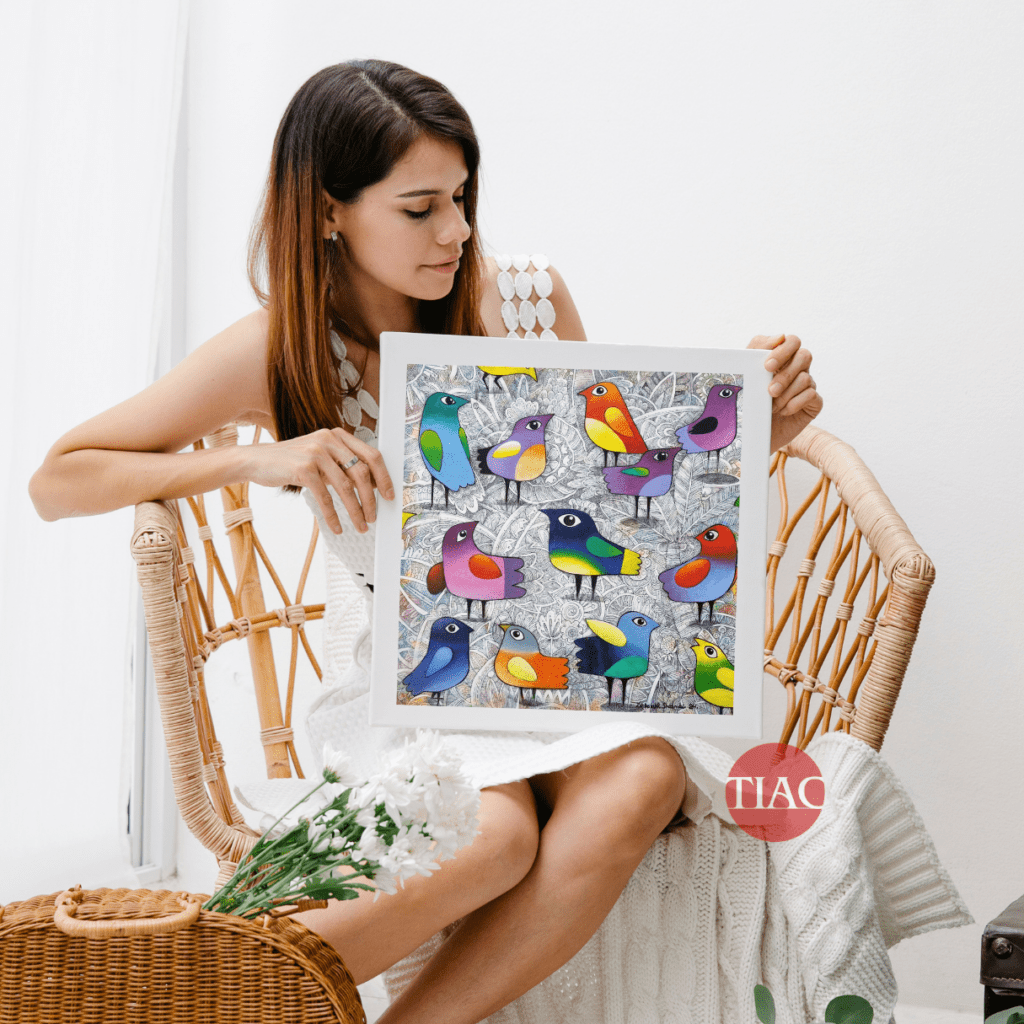
The Sundarbans is not just a geographical marvel—it’s a living canvas. Stretching across the delta of Bengal, the world’s largest mangrove forest has long inspired artists who seek to capture its raw beauty, complexity, and ecological fragility. “Mangrove Art” is an emerging genre that uses the visual language of painting, photography, and installation to reflect this unique ecosystem.
Artists find in the mangroves a metaphor for resilience and interdependence. The tangled roots, the shifting tides, and the quiet strength of the forest are translated into swirling brushstrokes, intricate sketches, and textured sculpture. The forest’s visual elements—mudflats, riverine creeks, and wildlife—become both medium and message.
What makes mangrove art powerful is its ecological consciousness. Many artists use recycled or natural materials, incorporating leaves, sand, or driftwood into their work. Some even use salt-affected surfaces to symbolize climate change. These aren’t just aesthetic choices; they are statements of urgency.
Children in Sundarbans villages are also encouraged to draw the forest as part of conservation education programs. Their colorful crayon works, full of tigers, birds, and boats, show a world where humans and nature still coexist—precariously, but beautifully.
Mangrove art is not confined to galleries. Murals on school walls, festival displays, and mobile exhibitions bring the forest’s story to the people who live within it. Through this art, the Sundarbans is continually reimagined—not as a distant wilderness, but as an integral part of human culture and survival.