

Durga Puja is not only a religious celebration but also a vast cultural canvas that inspires countless visual narratives. In recent years, contemporary painters have embraced Puja as a recurring theme, translating the festival’s energy, devotion, and symbolism into modern artistic expressions.
Unlike traditional depictions of the goddess, today’s painters are exploring bold, experimental styles. Some use abstract strokes to capture the rhythm of dhaak beats or the swirling smoke of dhunuchi dance. Others reinterpret Durga in surrealist or expressionist forms, portraying her not just as a goddess but as a metaphor for women’s strength, resilience, and empowerment in modern society.
Many artists also paint the pandal experience itself—the lights, the crowds, the street food stalls, and the blend of chaos and joy that define Kolkata during Puja. These works become cultural archives, documenting how the festival evolves with every passing year.
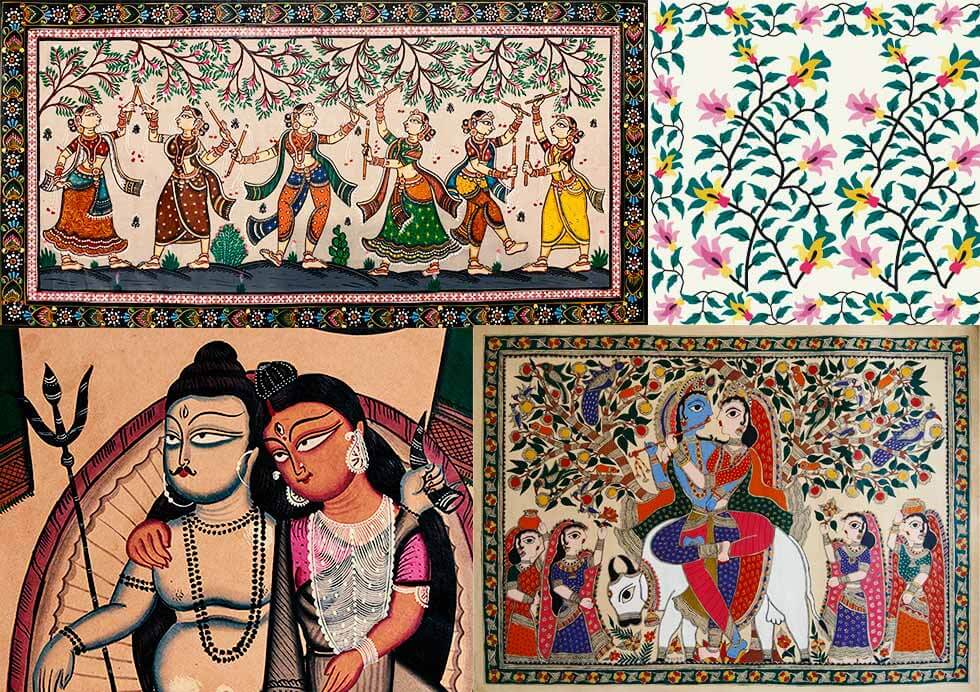
Contemporary exhibitions in Kolkata and beyond often dedicate sections to Puja-inspired works, giving painters a platform to experiment with scale, medium, and technique. Some mix acrylics with digital printing, while others bring folk elements like alpana or patachitra motifs into modern compositions.
What makes these explorations significant is their ability to bridge tradition with commentary. For example, a painting of Durga slaying Mahishasura might symbolize the fight against modern evils—climate change, inequality, or digital addiction. By reinterpreting mythology in current contexts, painters keep the stories alive and relevant.
For audiences, these artworks provide a fresh lens through which to experience Puja beyond the pandals. They invite reflection on what the festival means today, how it resonates with issues of gender, culture, and identity, and why it continues to inspire so deeply.
Durga Puja on canvas is thus more than an artistic subject—it is an evolving dialogue between the divine and the contemporary.