
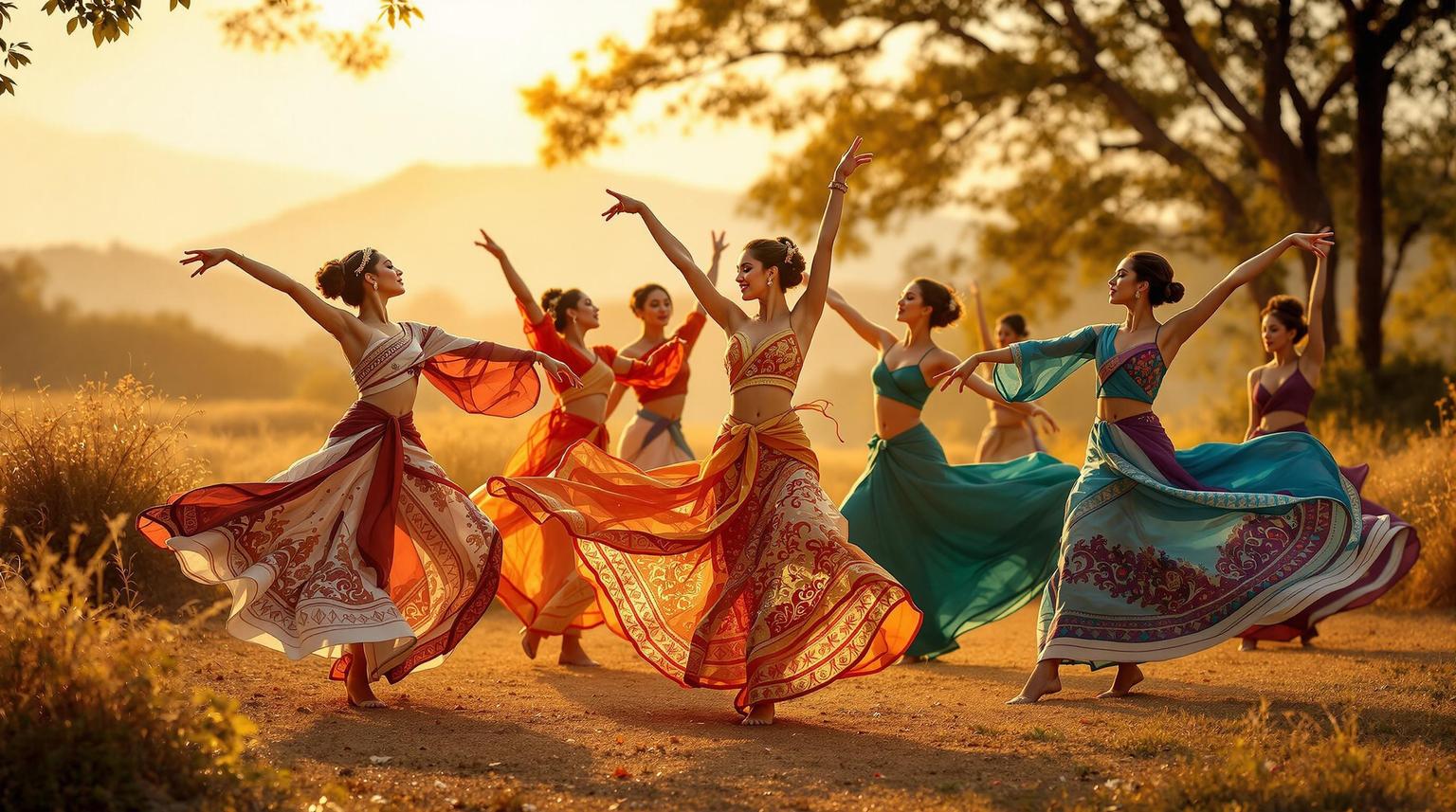

Dance is one of humanity’s oldest forms of storytelling. Long before written language, movement conveyed myths, emotions, and histories. Across the world, cultures developed unique dance traditions that became living narratives.
In India, Bharatanatyam and Kathakali translate epics into gestures, where each hand movement or facial expression carries meaning. In Africa, rhythmic dances often narrate community rituals, harvest celebrations, or spiritual journeys. Similarly, Native American dances embody sacred stories of creation and survival.
What makes dance universal is its ability to merge rhythm, body, and space into a language beyond words. A dancer’s leap can symbolize freedom, while a circle formation might reflect unity or cycles of life. Even contemporary dance, though abstract, often tells stories of identity, struggle, and social change.
Cross-cultural exchange has also enriched storytelling in dance. Flamenco’s roots trace back to Romani, Arab, and Spanish traditions, while ballet absorbed influences from folk dance. Today, global fusion styles mix hip-hop with classical, creating new stories for modern audiences.
Yet, dance as storytelling isn’t just about performance—it’s about community memory. Each dance step, preserved through generations, is a living archive that embodies history in motion.
Through dance, cultures remind us that stories aren’t only spoken or written—they can also be danced into being.