
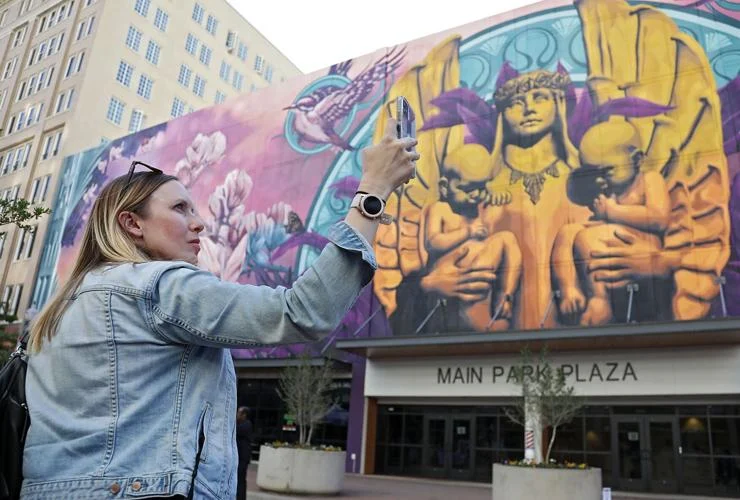

Street art has always thrived in public spaces, but augmented reality (AR) murals are pushing the boundaries of how people engage with art in parks and open areas. Imagine walking past a wall painting of a bird—and when you point your phone at it, the bird starts flapping its wings, singing, or even guiding you on a digital trail through the park.
These AR murals combine physical painting with digital layers. Artists first create a traditional mural, then embed scannable codes or invisible markers. Visitors with AR apps can unlock animations, sounds, or interactive stories. This makes art dynamic and participatory—no longer something you just look at, but something you experience.
Public parks are perfect for this innovation. Families, joggers, and tourists can stumble upon these interactive artworks, turning a casual walk into an artistic adventure. Some parks have even started hosting AR mural festivals, where visitors can “collect” digital artworks across the landscape, like a real-world treasure hunt.
The power of AR murals lies in their inclusivity. They can share local history, teach about ecology, or simply entertain. Yet they also raise questions: will people start valuing the digital layer more than the painted wall itself? Could technology overshadow the raw spirit of street art?
For now, AR murals represent a new harmony between technology and creativity. They show how public parks can be more than green spaces—they can become living, evolving art galleries under the open sky.