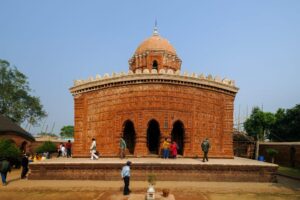
In the temple town of Bishnupur, nestled in the Bankura district of West Bengal, the reddish glow of terracotta sculptures doesn’t just reflect the sun — it radiates centuries of devotion, craftsmanship, and culture. Known as the cradle of Bengal’s temple architecture, Bishnupur’s terracotta art is not only a regional marvel but also a worthy parallel to India’s classical stone sculpture traditions.
What is Terracotta Art?
Terracotta, meaning “baked earth,” is a type of clay-based ceramic. In Bishnupur, it became the principal medium for temple construction and decoration between the 16th and 19th centuries, under the patronage of the Malla kings. These temples, made entirely of terracotta bricks, are adorned with intricate bas-reliefs and panels that narrate stories from:
- The Ramayana and Mahabharata
- Krishna Leela
- Local folklore
- Daily rural life
Architectural Grandeur Meets Artistic Finesse
Bishnupur’s temples are architectural gems — combining Bengali hut-style roofs with intricate terracotta panels. Notable temples include:
- Rasmancha – the oldest, known for its unique pyramid structure.
- Jor-Bangla Temple – famed for its curving roofs and sculptural detail.
- Madan Mohan Temple – a textbook example of Krishna-centric narrative art.
What sets these temples apart is not just their structure, but the rich storytelling on their walls — freeze-framed moments of mythology, carved with astonishing clarity and depth.
Symbolism and Technique
Terracotta artists, often anonymous, used local laterite-rich clay to hand-sculpt detailed scenes onto bricks. After sun-drying, the bricks were fired in kilns and assembled onto temple walls like puzzles. Their works reflect:
- Devotional themes
- Court life
- Hunting scenes
- Musical processions
- And even European soldiers — showing how the art evolved with colonial influences
Terracotta as Bengal’s Classical Sculpture
While South India had granite, and Central India had sandstone, Bengal had clay — and turned it into eternal sculptures. These reliefs rival classical Indian art in:
- Narrative complexity
- Symbolic representation
- Stylistic continuity across centuries
In fact, scholars argue that Bishnupur’s terracotta should be seen as Bengal’s regional response to the classical sculptural traditions of Ellora, Khajuraho, and Konark — with a folk soul and local flavor.
Modern Revival and Conservation
Today, efforts are underway to preserve these fragile terracotta temples from:
- Erosion and acid rain
- Tourism-related damage
- Lack of public funding
At the same time, Bishnupur’s legacy lives on through modern terracotta artisans, who create:
- Decorative panels
- Tiles
- Sculptures for collectors and museums worldwide
Organizations like the ASI (Archaeological Survey of India) and UNESCO have recognized the cultural importance of Bishnupur’s art, placing it on the global map of heritage tourism and architectural excellence.