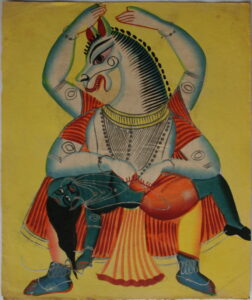
West Bengal, long celebrated as a cultural crucible of India, has birthed an artistic legacy that continues to find resonance far beyond its borders. From the folk traditions of Kalighat and Pattachitra to the refined brushstrokes of modernists like Jamini Roy and Abanindranath Tagore, Bengal’s art has steadily moved from local bazaars to global museums — even capturing the attention of institutions like the Louvre and the British Museum.
What began as storytelling on scrolls and temple walls has evolved into a powerful visual language. Kalighat paintings, originally sold outside Kolkata’s Kalighat temple in the 19th century, are now studied for their satire and proto-modernist style. Jamini Roy, inspired by this folk aesthetic, rejected European academic realism in favor of bold lines and indigenous motifs. His works are now part of collections in New York, London, and Berlin.
Even the terracotta artistry of Bishnupur, once reserved for temple architecture, is now recognized globally for its intricate craftsmanship. Similarly, the ancient lost-wax casting method used in Dokra metalwork — practiced by tribal artisans in Bengal for over 4,000 years — has drawn acclaim in art biennales and museums worldwide.
Perhaps most spectacularly, the annual Durga Puja in Kolkata — once a local religious event — has been inscribed on UNESCO’s Intangible Cultural Heritage list, with its pandals gaining recognition as ephemeral art installations of global stature.
Today, Bengal’s art continues to inspire dialogue between tradition and innovation. Whether in the hands of rural artisans or hanging in global galleries, its voice is clear: rooted in heritage, yet profoundly modern. As Bengal art increasingly graces international stages, it affirms a universal truth — that the local, when deeply authentic, is always global.